quantum vis

as much as you please…


Leave a comment

Five and Dime Tulips

2016-09-05-14-42-25

I saw the 1982 film ‘Come back to the Five and Dime Jimmy Dean’ this week and it got me thinking about Five and Dimes.

They were American shops, originally pioneered by the Woolworth brothers in 1879, selling a variety of inexpensive items. The Five and Dime concept blossomed around the world, in Britain they were called Three Penny Shops. In Australia we call them Two Dollar Shops.

These shops are great places to fossick around, you never know what bargains you will find.

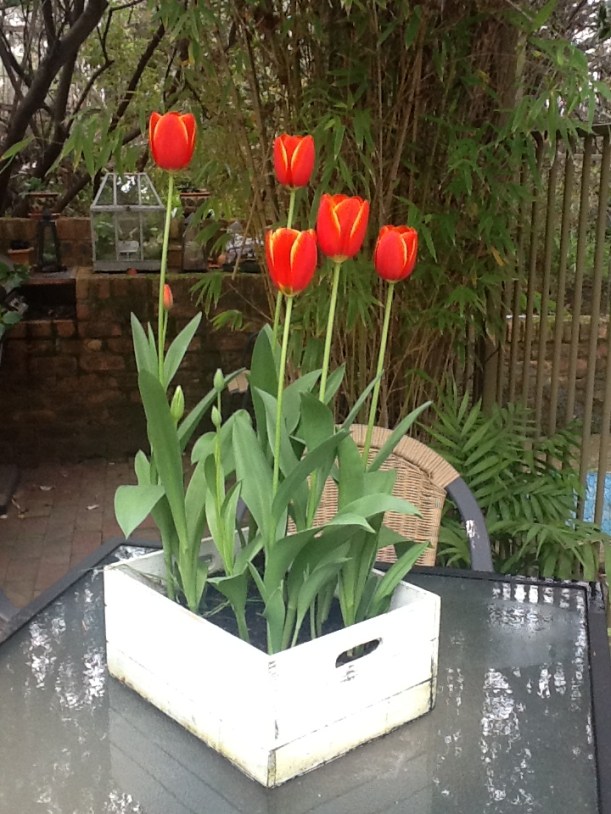
That’s where I bought this white wooden box for a couple of dollars.

I drilled a few holes in the bottom, then covered with a little gravel to increase drainage.

Over the gravel I placed a piece of plastic fly-screen to prevent the soil from entering the gravel layer and plugging up the drainage. You can buy inexpensive plastic fly-screen and gravel from hardware shops.

Next, it was a matter of filling with potting mix and planting up; annuals, bulbs or perennials will all look pretty.

In my case, I decided on tulip bulbs.

Because we don’t have really cold weather in Southern Australia I place my tulips in the crisper department of my refrigerator for about a month. This simulates European winter conditions and the bulbs think they are lying under a covering of snow. It’s a fun trick which produces better blooms and gets your family wondering about the unusual vegetables in the refrigerator.

I planted the bulbs up earlier this year in July and here they are.

Splendid tulips in their five and dime box.

JT


Leave a comment

Small World

This slideshow requires JavaScript.

Remember our love of doll houses and model railways as children?

Miniatures are romantic; they intrigued us in our youth and for many they continue to intrigue us as adults. They are a doorway back into our childhood.

We image a miniature life and in our mind we are transported into a small, uncomplicated world.

I adore miniatures and here are some in my garden.

JT


Leave a comment

Physics in the terrarium

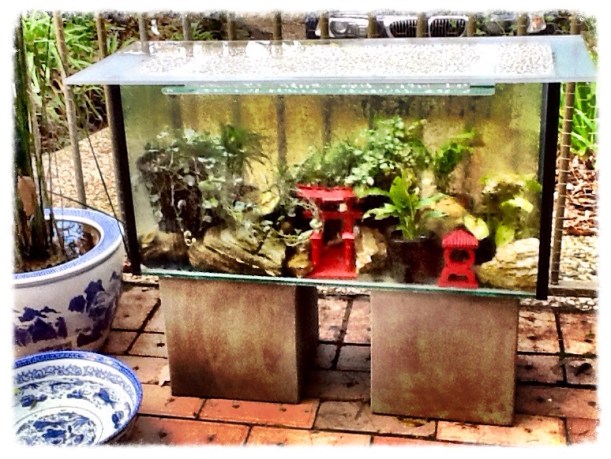
Softer Edge Terrarium

Don’t you love Professor Brian Cox, the boyishly handsome, ex-rock star who is now a renowned physicist?

I studied physics at school and even took a unit in my first year at university but my understanding of the subject has diminished over the years.

Hardly any knowledge of physics remains but I give an occasional nod of recognition when watching Professor Cox’s documentaries on television.

This winter I am perplexed by an intriguing physics phenomenon in my garden.

I rescued an old fish tank from my local tip and made it into this terrarium.

It stands on two unturned pots from K-Mart, a favourite inexpensive hunting ground of mine.

My greatest outlay was the piece of perspex I had cut to act as a cover. I tried recycling old picture and window frames but they let the rain in, so perspex it was.

I spotted the red fish tank ornaments when visiting a local pet shop, they complement the prevailing Asian theme of my garden and are just the right size.

Luckily I also found these unusual rocks in the pet shop and they fit perfectly.

The terrarium keeps my delicate plants warm over winter.

However, an odd phenomenon occasionally happens. On dull days the terrarium glows as if a fluorescent light is switched on inside. It’s truly amazing.

Interior condensation seems to intensify the winter light shining into the terrarium.

My physics is so sketchy I don’t understand what is happening. Is it dispersion, refraction or perhaps polarization of the light?

Now, let me see if I can find Professor Brian Cox’s website. I will email him and ask.

JT


Leave a comment

Ode to Giant Shells

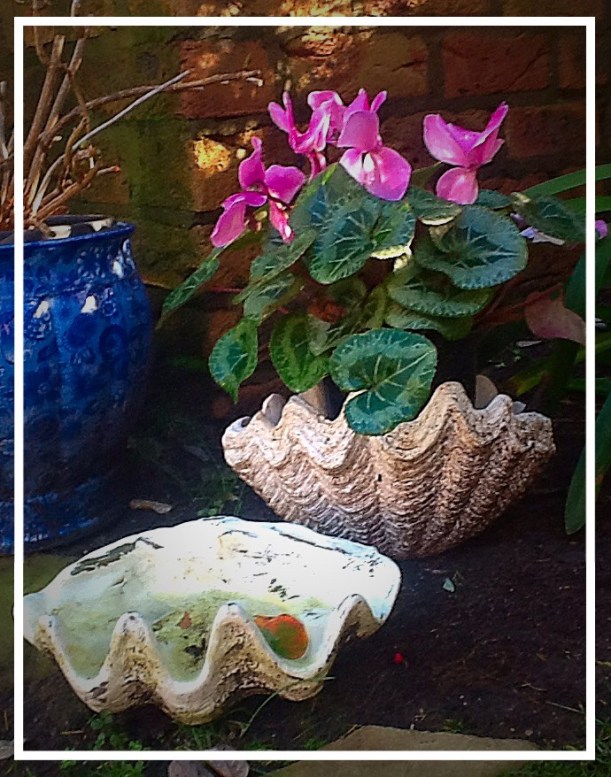
My Garden Clam Shells


Remember Pete Seeger’s haunting 1960’s song ‘Where have all the Flowers Gone?’

This week it’s been playing in my mind as I wonder, where have all the giant shells gone?

The song became a musical icon of the 1960s and in the same way giant clam shells were icons of 1960’s garden decoration.

Sadly they have simply disappeared, a long time ago.

Often the shells were collected from the sea but sometimes they were cement copies. Either way, I always loved them.

Other garden icons from the era such as white swan planters and garden gnomes were kitsch and lacking the simplicity of the giant shells.

The shells usually sat under garden taps catching excess water, creating somewhere for wildlife to drink and bath. Sunlight reflected on the water creating a tranquil but modest focal point in a garden.

I remember two giant clam shells from my childhood, both siting under garden taps.

The first was in a temperate garden of majestic trees with birds bathing in the clam shell and fallen leaves floating on the water’s shimmering surface.

The second was in a hot seaside garden and the shell was real. It sat in sand and the sight of water in the shell gave welcome respite from the summer heat.

Imagine my delight when I spotted these two beauties at the Melbourne International Garden Show earlier this year.

Now I have my very own giant clam shells and it’s been a long time coming.

Pete Seeger sang ‘Oh when will we ever learn?’ Sometimes gardeners need to disregard current fashion and refocus on the charm of the past.

JT


Leave a comment

Violet Elliott’s Violets

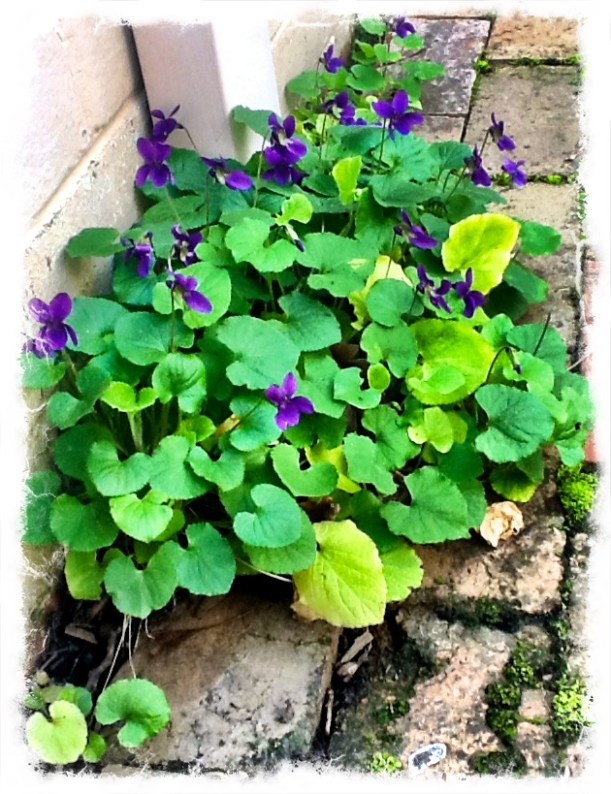
Violet Elliotts Violets

When I was a girl Violet was an old fashioned name. It brought to mind elderly women in sensible shoes who attended church every Sunday and Garden Club once a month.

My Grandmother, Violet Elliott was such a woman.

She tended a lovely country garden under majestic oak trees.

Below her kitchen window Violet Elliott grew lily of the valley, and in spring happy daffodils popped up in her front garden. She kept a fine collection of delicate ferns at her back door and was proud of her large walnut tree.

The plants Violet Elliott loved to grow the most was her namesake, violets.

This photo shows violets in my garden with their late winter flowers. I grew them from a cutting taken from my mother’s garden, who was given the original cutting by her mother, Violet Elliott.

My violets amaze me. They survived a ten-year drought, the heat of a record summer and this winter’s deep cold. But here they are as bright as can be.

I am proud to grow these resilient violets cultivated from Violet Elliott’s original plants and naturally they remind me of her.

Farmers’ wives of Violet Elliott’s vintage endured husbands at war and usually had lots of children to raise. They took challenges and hardships in their stride.

In the same way, my hardy violets seem to take everything the weather can throw at them.

The name Violet has recently become popular again. In years to come, when these young Violets of today are grown women, perhaps they will also grow violets in their gardens as my Grandmother did.

But most of all, I hope these little girls will grow into resilient women like Violet Elliott.

JT