quantum vis

as much as you please…


Leave a comment

The Shamrock

Shamrocks

Oversized sunglasses, comical frizzy wigs and crazy bowties-all emerald green. Then there’s the cheap Aussie beer, dyed green with food colouring. Yes, Friday was St Patrick’s Day.

I live in a university town and students love to drink abundantly while in fancy dress, so St Paddy’s Day is a big day out for them and the bars were full.  

After 5pm a more prosperous crowd, who can afford to drink actual Guinness, invariably spilled out of their shops, offices and banks and joined the Irish revelry.

I began to think about that symbol of Ireland, the Shamrock.

Also known as clover, the Shamrock is a hard plant to pinpoint because even the Irish acknowledge the icon is actually several species. It seems everyone has a different Shamrock; Lesser Clover, White Clover and Red Clover all get a guernsey, as does Black Medick.

The most important feature of the Shamrock sprig is its three, distinctive heart shaped leaves.

St Patrick used the Shamrock in his evangelistic teaching during the 5th century to illustrate the Christian Holy Trinity.

Here in Australia our Shamrocks are Oxalis acetosella or Wood Sorrell.

This plant is a prolific weed, possibly the most frustrating weed for Australian gardeners. In spring it covers gardens and the countryside, but I’m sentimental and I only see its beautiful emerald foliage and the sea of pretty yellow or white flowers floating above. Of course, it has the three heart leaves.

Oxalis grows in abundance in my garden-what weed doesn’t? It pops up in garden beds, between pavers and, in spring, it shrouds the entire wild garden.

That is spring but now it’s early autumn and Oxalis was difficult to find in my garden this week. Eventually, I located a few lucky shamrocks not extinguished by the summer heat to photograph. 

Please enjoy my photographs and lets celebrate St Patrick’s Day, I wish you all the luck of the Irish.

JT
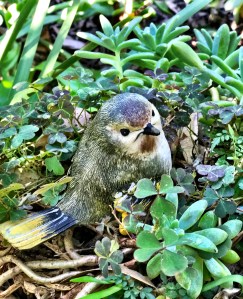
 

Shamrocks and bird

A small ceramic bird sits amongst the Shamrocks


Leave a comment

The Brassy Tart

Rose 1

Double Delight

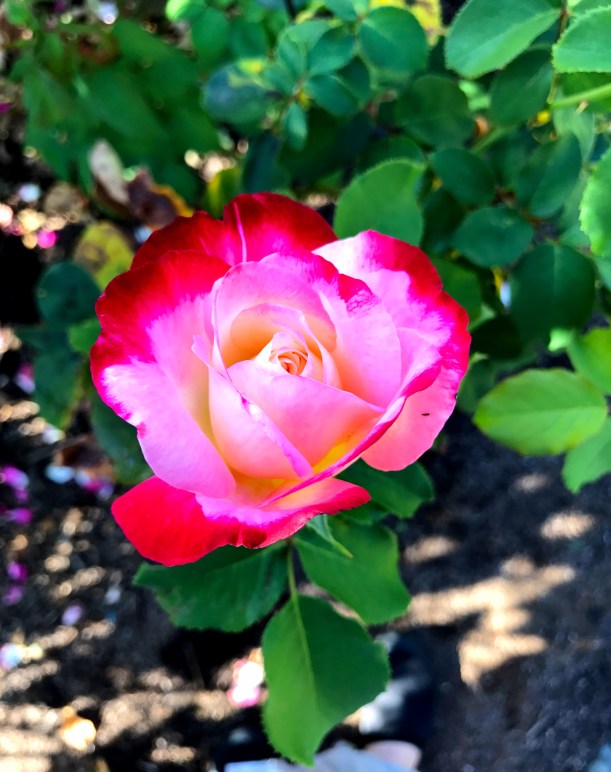
Beautiful, brassy and extraordinarily tarty, she resembles Marilyn Monroe bursting out of a red dress.
Yes, this is the one!
Summer fades like old beach towels drying on a clothes line and I hadn’t even selected my annual perfect rose for 2017.
Each summer of my childhood, my mother took me to look at the roses in our municipal rose garden, which happened to one of the best in the state. Together we marched along the colourful boarders and selected our favourites. I like to continue this annual practise, it’s a great way to get to know rose varieties.
I headed for my local park where the rose beds still displayed abundant late blooms. Scores of roses held themselves with glorious confidence, many with strong clear colour while others floated in shades of soft perfection. All had elements of loveliness.
But as soon as I saw her, the one I named Marilyn Monroe, I knew she was the rose.
My perfect rose for 2017.
She has an antebellum excess, look at that scarlet shawl wrapping itself around a hot pink gown covering her subtle peach petticoats. I’m surprised Rhett Butler isn’t declaring his love.
She is Hollywood glamour amongst classic Shakespeare and I surprised myself with this selection.
Where had my taste for quiet elegance gone?
Refinement was out the door because this beauty’s lavish ‘joie de vivre’ overwhelmed me.
I was so bedazzled I didn’t catch her name, but my dear mother tells me she is ‘Double Delight’.
Below are the runners-up.
JT


Leave a comment

They Ring my Bell

bells-1

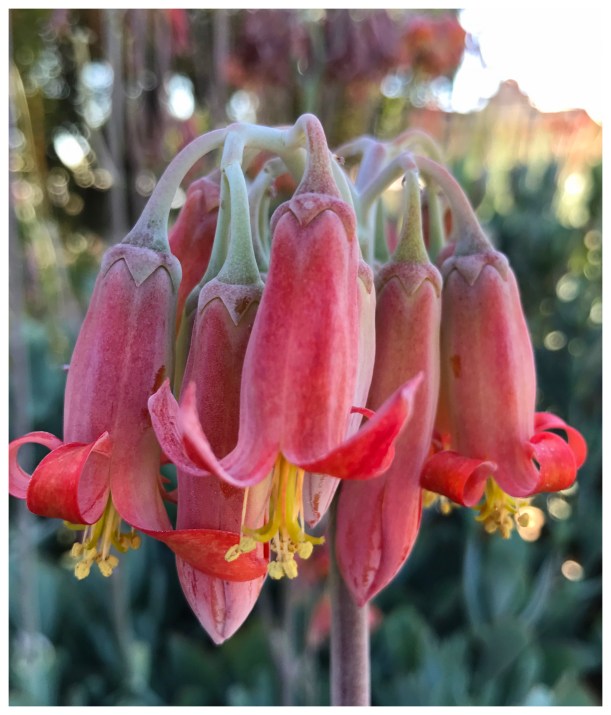
 Recently I found a few tiny bells hiding amongst my Pig’s Ears.

That is an odd statement-let me explain.

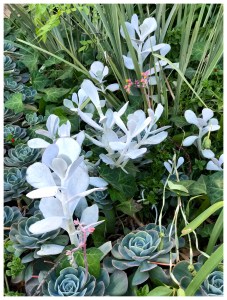
Pig’s Ears or Cotyledon orbiculata are hardy succulents from South Africa. As expected the leaves resemble pig’s ears. It’s an unpleasant name for a plant with pretty bell shaped flowers in a coral shade.

Oh, how I adore bell shaped flowers.

I rather like Pig’s Ears for another reason, they add interest in the deeply shaded sections of the garden. This is because Pig’s Ears have grey leaves. Lighter colours like grey and white helps to visually break the shadows up by giving the eye something to focus on in the dimness. This creates a sense of depth in shade and I am very grateful to Pig Ear’s because I have a lot of shade in my garden.

Pig’s Ears grow well in hot, barren regions because they are covered with a white powdery substance which assists the plant to reflect sunlight and therefore conserve water. This is a great adaptation for plantings in full sunlight but it isn’t particularly helpful for my Pig’s Ears growing in shade. They struggle, and until recently had never flowered.

Therefore I was delighted when I came across a few precious coral bells, nearly obscured amongst the plump grey leaves.

I’m not alone in my love of bell shaped flowers, why do they charm us?

Perhaps we marvel at their diminutive elegance and dainty fragility. Or is it because the bell shape is not a common flower shape; the elusive and exotic is always enticing. Maybe we love them simply because we relate the flowers’ shape to a familiar object, the bell.

I love the bells for all these reasons. Here are some bells on Pig’s Ears chiming in my garden.

JT

bells-5


Leave a comment

The Garden Destruction Crew

Garden Dogs.jpeg

Sometimes my two dogs are my greatest garden frustration.

They charge around the garden destroying lawn, foliage and even knocking over potted plants.

But it is their environment as well as mine and without the pair of them the space would seem lifeless.

In fact, they know it more intimately than I do and I’m sure they love it just as much.

I look the other way when damage happens because I’m happy when the dogs are happy.

And such a jovial pair they are, chasing birds, hunting lizards and darting across the lawn for the joy of it.

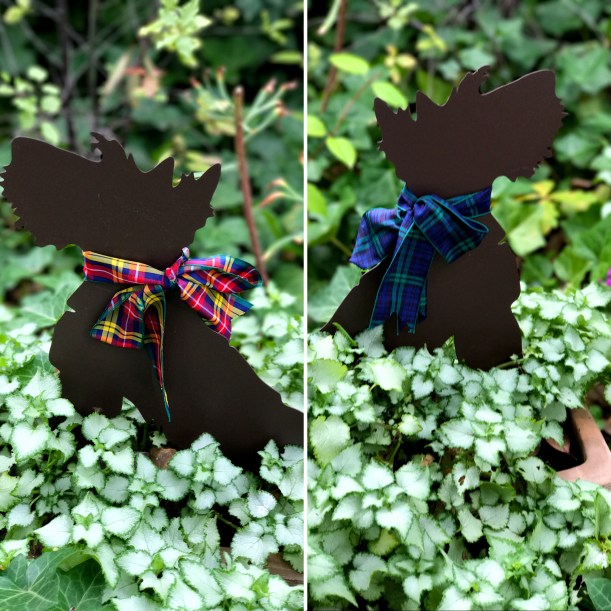
It seems appropriate for me to honour my dogs in the garden they love with a few fun likenesses.

These Westie silhouettes are floating in a sea of Dead Nettle (Lamium maculatum).

Dead Nettle is distantly related to stinging nettles having fine hairs which cover the leaves but the hairs are ‘dead’ and do not sting. They enjoy a moist soil and do well in the shade. Be aware, some Dead Nettles sold in nurseries are annuals and some are perennials, I’ve been caught out in the past with plants dying in Autumn.

Dead Nettles have a tiny snapdragon like flower in shades of purple or pink and their variegated leaves of dark green and silver look fresh.

In deep shade these Dead Nettles highlight the dog silhouettes which otherwise would become less significant amongst the ground cover of dark green ivy.

I’m happy to report my canine destruction crew are yet to demolish their effigies.

JT


garden-dogs-2


Leave a comment

The Nudist Colony

ncol-4

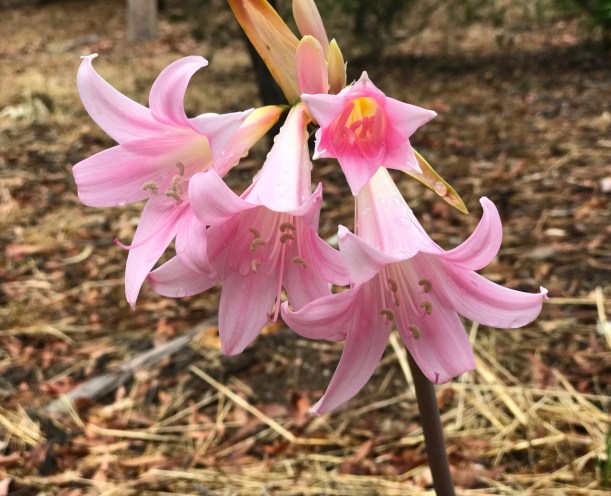
It has been a very hot summer in Australia and I have naked ladies lounging around my garden.

No, they are not sunbathing by the swimming pool instead they are standing in shameless glory atop the most barren and inhospitable sections of my garden.

The Belladonna Amaryllis or Naked Lady is one of the prettiest, yet one of the hardiest plants I grow. Naked Ladies essentially grow themselves because they don’t require any attention or watering. A native of South Africa, they survive in extremely dry conditions and prefer full sunlight.

It is not the pear shaped bulb or the feminine pink flowers which give the plant its name. Rather it is the bare naked stems, growing straight and tall without leaves.  This is the flowering stage and the brazen blooms of Naked Ladies do not have leaves to hide their modesty.

Flowers appear in high summer boldly showing off just as other garden plants are wilting in the heat. The pink blooms glow in the hard summer light then after a couple of weeks in the sun the colour softens.

Although they are lily like, Naked Ladies are not a true lily and one stalk can support several trumpet-shaped blooms.

The flowers die back in autumn and this is when the strappy leaves make their appearance. By early spring the leaves also die back and the bulb goes to sleep, becoming dormant until the next summer.

Although hardy, Naked Ladies do not transplant well and take several years to bloom if moved.

Don’t confuse them with the poisonous Atropa Belladonna or Deadly Nightshade, a similarly named plant which is not related.

I grow Naked Ladies along my bottom drive which winds through the wild garden. It seems an appropriate place for a nudist colony.

JT


ncol-2


Leave a comment

Hotel for Wild Guests

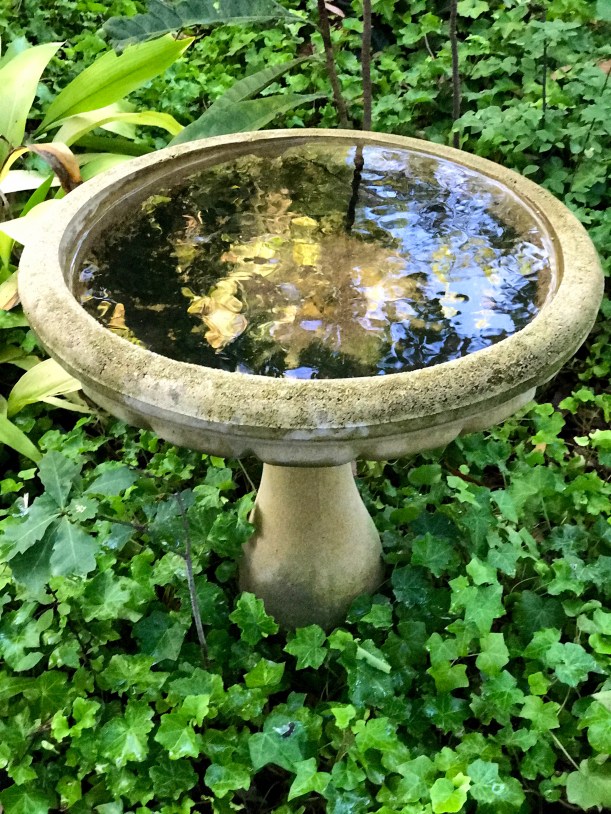
large-bird-bath

My large country garden is a five-star hotel for wildlife and the clientele is as unique as any hotel guest list.

A couple of wild ducks, who I call Heckle and Jeckle book in each spring, the swimming pool is their favourite facility. They stay in the more secluded rooms, nesting down in the wild garden.  

I often see them on the observation deck-aka the roof of my house-where they prance up and down enjoying the view while quacking about everyone and everything. 

The Rosellas make a group booking and arrive on mass. They’re a rowdy lot and on occasion I’ve had to ask them to keep the noise down. They like to hang around the side garden where they are close to the buffet when the fruit on the flowering Prunus ripens. 

Lizzie Lizard has recently upgraded from her suite in the terracotta garden to rooms in the hibachi barbecue with a charming view of the pool. 

Mr. Pobblebonk, the frog, enjoys staying in the damp leaf litter but occasionally has a sauna in the outdoor terrarium. 

The magpies are suave in their penthouse trees, always dressed in their finest dinner suits. They prefer rooms at the top of the tallest trees and when they come down to bathe only the largest bird bath will do. 

The pigeons don’t like height, they are strictly ground floor guests and have the run of the turquoise garden. They potter like a group of old women on a package holiday. Their heads bob up and down as if they are chatting and stepping quickly. No one wants to miss the tour bus. The pigeons puff out their chests, so their fronts resemble frilled shirts covering matronly breasts. ‘My dear, where is the Devonshire Tea?’ I imagine them asking.

Bees are the executive travellers, far too busy to lounge around. They are up and off at daybreak with work to do, gathering pollen from dawn until dusk.  

In summer it really sizzles here, so I keep six bird baths and eleven water bowls for my guests. They all need replenishing often and everyday I trot around with the garden hose.  

I’m happy to say, many of my guests are waiting for me as I deliver their room service.

JT


Leave a comment

Pearls and Gardenias

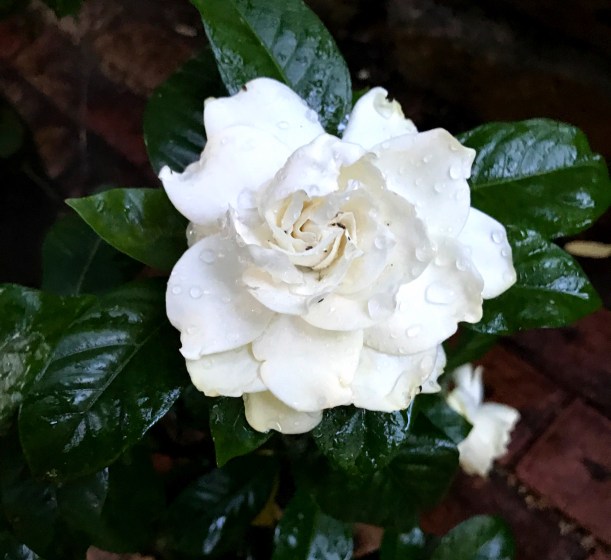
Gardenia.jpeg

Have you heard? Pearls are making a comeback in 2017.

In the 1980s a string of pearls was a girl’s perfect 21st birthday gift and I was one of those girls. They went out of fashion, and now they are back.

Gardenias were another favourite in the 1980’s and in some ways pearls and gardenias have many similarities.

As pearls age, they are prone to dry out and the lustre of white pearls often turns a shade of cream over the years.

Just like the pearl, the gardenia’s flowers are a pristine white at first, but over a few days they also dry out and turn a deep cream.

The gardenia is a small, lush bush with glossy leaves which produce heavily perfumed blooms from spring through to summer. This photo is a specimen in my garden.

Both gardenias and pearls need a little TLC.

Let’s begin with pearls. They are not as robust as other jewels, and chemicals can damage pearls so absolutely no contact with hair spray, cosmetics and perfumes. Because of this, pearls should be the last thing on when dressing and the first thing you remove in the evening. Store them separately in a soft pouch to prevent scratching and damaging the delicate iridescent coating.

Now let’s consider the special care gardenias require.

They prefer acid soil with some shade; protect them from harsh afternoon sunlight. Gardenias do not tolerate frosts, so look for a cosy corner in your garden to plant them. They do very well in pots.

Regularly feed gardenias during the growing period, from spring through to late summer, because without this extra nutrition the leaves will turn yellow.

In the past, yellow leaves were thought to be lack of magnesium, so diluted Epsom salts were applied to the plant. Now it is thought a good multipurpose fertilizer is all that is required to prevent leaves yellowing.

The blooms can be cut, but just like pearls, they are very delicate and the flowers may bruise so be careful.

I’m rather looking forward to seeing more pearls about, although I must confess I never really stopped wearing mine.

Remember, look after your pearls as well as your gardenias and they will both give you years of joy.

JT


Leave a comment

A Floral Salute

This slideshow requires JavaScript.


A happy New Year to you.

2016 is gone but not forgotten. I thought I would bring the New Year in with a slide show of the best flowers I photographed last year.

It was a great year for my garden with plenty of rainfall in the region. We are not usually so blessed and the extra moisture in the ground had the garden looking great. A few extraordinary blooms popped out in 2016 and I’d like to share them with you.

In September I managed to get my hands on a new iPhone 7 plus and I am very impressed with its photographic capabilities. Most of these shots are taken during our spring in the Southern Hemisphere with my new iPhone, that’s September, October and November.

Perhaps 2017 will be the year I get myself a proper camera and do that photography course I am always dreaming of.

Please enjoy my slide show, a floral salute to 2016.

JT


Leave a comment

The Goodness of Vegetables


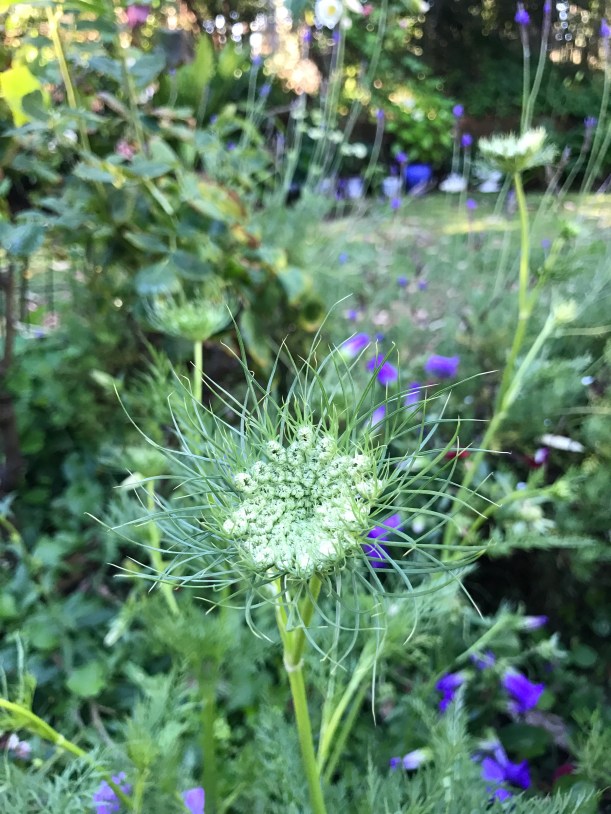
carrot-flower

I’ve been busy over the past few months and hadn’t got around to pulling out the old winter vegetables and planting summer vegetables.

This tardiness resulted in some unexpected additions to my garden.

A few winter vegetables began to flower and some very pretty blooms popped up.

The prettiest were the carrots whose flowers resembled the delicate heads of the popular garden plant ‘Queen Anne’s Lace.’

‘Queen Anne’s Lace’ is actually member of the carrot family and is sometimes called ‘Wild Carrot,’ this is why it looks similar to my carrot flower.

This week the winter vegetables have finally been pulled out and summer ones planted.

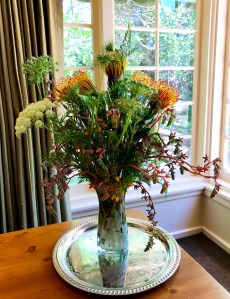
Before pulling the carrots out I cut their flowers and created a floral arrangement for my dining room.

I couldn’t waste such beautiful blooms, even if they do belong to carrots.

Cut flowers, that’s an unexpected benefit of growing vegetables-they really are plants with prodigious goodness.

JT

good-pic-of-vase-of-flowers